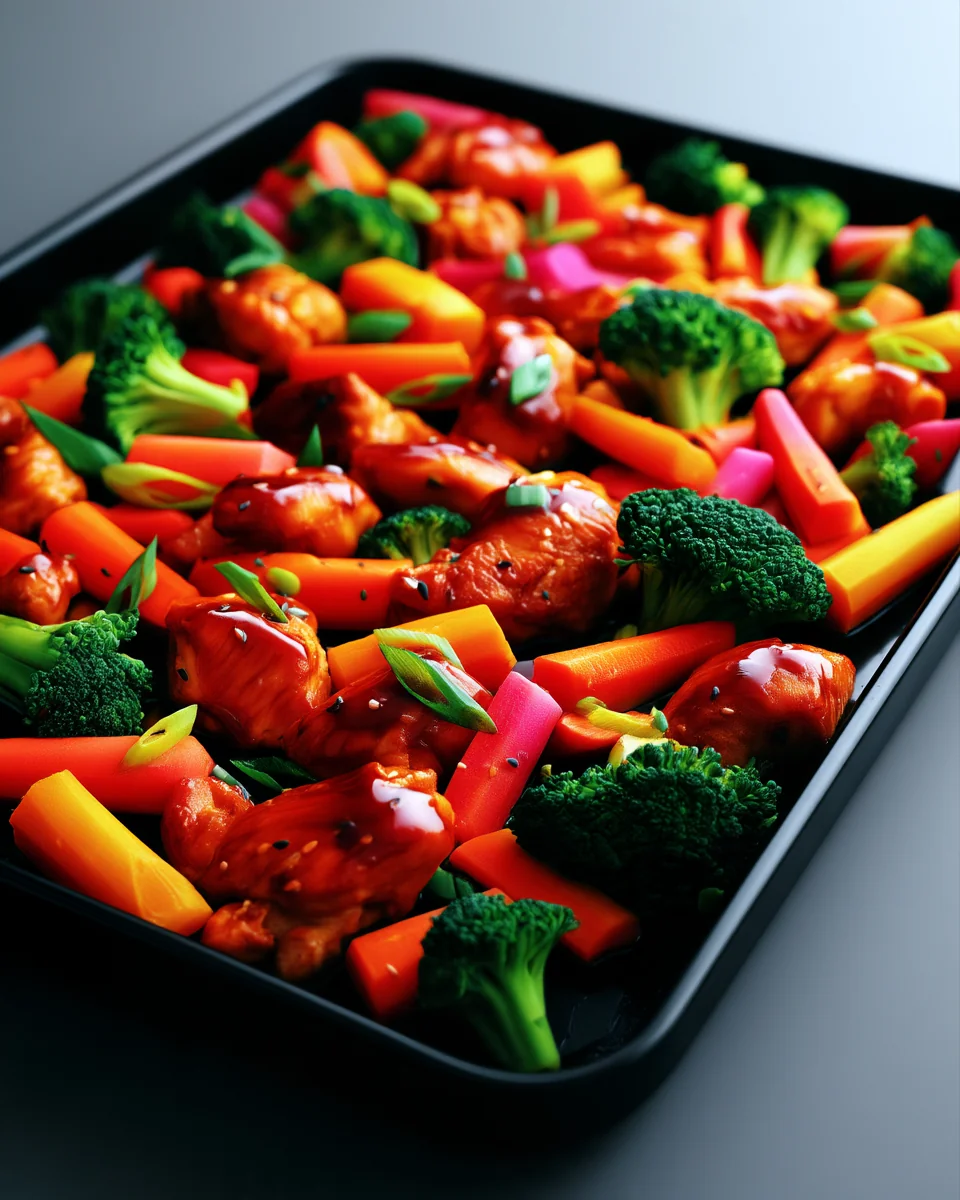
Sheet Pan Chicken Teriyaki is a delightful dish that brings a savory, umami-rich flavor straight to your dinner table. The tender chicken, vibrant vegetables, and glossy sauce combine to create a meal that's both wholesome and satisfying. Perfect for weeknight dinners, this recipe allows you to prepare a complete meal in just 30 minutes, minimizing cleanup and maximizing flavor.
This version stands out because it incorporates a cornstarch slurry, creating a thick, clingy sauce that coats every piece of chicken and vegetable. This ensures that you avoid the frustration of a watery sauce pooling in the pan, a common problem in many teriyaki recipes. By mixing the slurry in right before serving, every bite will be flavorful, not bland.
Why You'll Love This Recipe
- One-pan simplicity — everything cooks together on a single baking sheet, making both prep and cleanup a breeze.
- Thick, clingy sauce — the cornstarch slurry keeps the sauce coating the chicken and veggies instead of pooling in the pan.
- Colorful veggies — broccoli, carrots, snap peas, and bell peppers add not just nutrients, but also a nice crunch and freshness.
- Quick cook time — in just 25 minutes, you’ll have a hearty meal ready to serve, perfect for busy days.
- Flavor versatility — adjust the sauce ingredients to match your taste, whether you prefer a sweeter teriyaki or a more savory twist.
Ingredients & Substitutions
Serves 3-4
For the Teriyaki Sauce
- 1/2 cup soy sauce — provides the salty, umami foundation; use low-sodium if desired.
- 1/4 cup mirin — a sweet rice wine that adds depth; if unavailable, use a mix of 2 tablespoons of white wine and 1 tablespoon of sugar.
- 2 tablespoons honey — sweetens the sauce; maple syrup can be used as a vegan alternative.
- 6 tablespoons brown sugar — enhances the sweetness; you can replace it with coconut sugar for a different flavor profile.
- 3 garlic cloves, minced — adds aromatic flavor; garlic powder can be used if fresh isn’t available, though it’s less potent.
- 1/2 teaspoon ginger paste or ground ginger powder — brings warmth and spiciness; fresh ginger is preferable for stronger flavor.
- 1 tablespoon cornstarch — thickens the sauce; arrowroot powder can be used if you need a gluten-free option.
For the Chicken and Vegetables
- 2 lbs chicken breast, cut into bite-sized pieces — the main protein source; thighs can be used for more flavor and moisture.
- 1 lb broccoli florets — adds nutrition and a crunchy texture; green beans make a good substitute.
- 3-4 large carrots, peeled and cut into bite-sized pieces — for sweetness and color; parsnips can be used for a different bite.
- 8 ounces sugar snap peas — provides a crisp snap; regular peas can work but will lose crunch during cooking.
- 1-2 bell peppers, thinly sliced — contributes sweetness and color; any color bell pepper works well, and zucchini is a suitable swap.
For Garnishing
- Sesame seeds — offer crunch and a nutty flavor; toasted sesame seeds enhance the dish's nuttiness.
- Fresh sliced green onion and chives — for freshness and color; if unavailable, use finely chopped red onion for a different sharpness.
How to Make Sheet Pan Chicken Teriyaki
Step 1: Make the Teriyaki Sauce
In a small bowl, mix together 1 tablespoon of water and 1 tablespoon of cornstarch to create a slurry. Set this aside for later use. In a small pot, whisk together the soy sauce, mirin, honey, brown sugar, minced garlic, and ginger. Place this over medium heat, bringing it to a boil. Once boiling, reduce heat to a simmer, then whisk in the cornstarch slurry. Cook for 1-2 minutes until thickened. The sauce should coat the back of a spoon and cling to it nicely, indicating it's ready. Set aside in a warm place.
Step 2: Preheat the Oven
Preheat your oven to 400°F (200°C). This high temperature is key in ensuring the chicken cooks quickly without drying out, while also keeping the vegetables vibrant and crisp.
Step 3: Prepare the Baking Sheet
Line a large baking sheet with parchment paper. This not only prevents sticking but also aids in easy cleanup afterwards. Make sure the surface is flat to allow for even cooking of all ingredients.
Step 4: Toss the Chicken and Veggies
In a large bowl, combine the chicken pieces and all vegetables except for the snap peas. Pour half of the prepared teriyaki sauce over the mixture and toss until everything is evenly coated. Spread this mixture in a single layer on the prepared baking sheet. It’s important to avoid overcrowding to ensure proper roasting.
Step 5: Roast the Chicken and Veggies
Place the baking sheet in the preheated oven and roast for 15 minutes. During this time, the chicken will start to brown, and the vegetables should become tender while retaining their bright color. After 15 minutes, remove the baking sheet and gently stir in the sugar snap peas.
Step 6: Final Cooking
Return the baking sheet to the oven and roast for another 5 minutes. This short additional time allows the snap peas to become tender yet still crunchy. You’ll know it’s done when the chicken reaches an internal temperature of 165°F (74°C), and the veggies are vibrant and tender.
Step 7: Serve and Garnish
Once finished, remove the pan from the oven. Drizzle the remaining teriyaki sauce over the cooked chicken and veggies, sprinkling sesame seeds, sliced green onions, and chives on top for garnish. Serve immediately over rice for a filling, flavorful dinner. Enjoy!
How to Serve Sheet Pan Chicken Teriyaki
Serving your Sheet Pan Chicken Teriyaki right can elevate the meal. This dish is not just about flavor but also about how it looks and feels on the plate. Whether it's a quick weeknight dinner or a casual gathering, knowing how to serve it makes all the difference.
Serving Ideas
- Serve hot for maximum flavor — Plate the chicken and vegetables immediately after baking for the best taste and to enjoy the sauce's full richness. Allow about 5 minutes on the stove if you'd like to wait before serving.
- Use a wide platter — A large serving plate or bowl keeps the chicken and veggies from getting cramped, allowing the colors to shine and the toppings to stay prominent. This also makes it easier for guests to serve themselves.
- Garnish generously — Top with sesame seeds, sliced green onions, and chives right before serving to add a fresh crunch and visual appeal. This takes only a minute and makes a big difference.
- Ideal for casual gatherings — This dish is best served family-style for gatherings. Set the sheet pan directly on the table with plates, allowing everyone to take their preferred portions and enjoy the meal in a relaxed atmosphere.
What to Serve Alongside
- Steamed jasmine rice — Its fluffy texture pairs well with the sticky teriyaki sauce, balancing the richness of the dish.
- Crisp cucumber salad — The cold crunchy cucumbers add a refreshing contrast to the warm chicken and veggies, enhancing the overall meal experience.
- Pickled ginger — The tangy punch of pickled ginger complements the sweetness of the teriyaki, offering a vibrant flavor contrast.
- Roasted sesame broccoli — Adding roasted broccoli amplifies the veggie content and provides a nutty flavor that pairs well with the teriyaki sauce.
- Miso soup — This traditional side dish brings warmth and umami to the table, complementing the chicken's flavors while offering a soothing contrast.
- Sliced avocado — Creaminess of avocado tones down the dish's sweetness, creating a nice balance while also adding a rich texture.
 Pin it
Tips for the Best Sheet Pan Chicken Teriyaki
To perfect your Sheet Pan Chicken Teriyaki, consider the following tips. Each one addresses common pitfalls or enhances the dish's overall quality.
- Make a corn starch slurry — Combining 1 tablespoon of corn starch with 1 tablespoon of water helps thicken the sauce to cling to the chicken and veggies, preventing it from pooling at the bottom of the pan.
- Ensure even cutting of chicken — Cut the chicken into uniform bite-sized pieces (about 1 inch) for consistent cooking, ensuring they're all ready at the same time without any dry spots.
- Don't overcrowd the pan — Spread the chicken and vegetables in a single layer on the baking sheet. This allows each piece to roast evenly, resulting in tender chicken and vibrant veggies rather than steaming them.
- Check for doneness — The chicken is safe to eat when it reaches an internal temperature of 165°F (74°C). Use an instant-read thermometer in the thickest part of the chicken to ensure accuracy.
- Use vibrant vegetables — Choose fresh, colorful vegetables. Broccoli should be bright green, carrots should be crisp, and snap peas should have a shine. This impacts both flavor and visual appeal.
- Let leftovers cool completely — If you have any leftovers, allow them to cool completely before storing. This helps avoid excess moisture in the container, which can lead to soggy chicken and vegetables.
- Reheat gently — When reheating, do so on low heat for about 10 minutes to maintain the chicken's moisture and avoid drying it out, ensuring the flavors stay intact.
How to Store Sheet Pan Chicken Teriyaki
To maintain its best quality, keep leftovers in an airtight container in the refrigerator for up to 3 days. This is essential since cooked chicken and vegetables can spoil if left out at room temperature.
Room Temperature
- Not recommended for storing cooked chicken teriyaki due to spoilage risk.
- If left out, consume within 2 hours.
- Check for off smells or changes in texture to determine if it's gone bad.
Refrigerator
- Useful for storing up to 3 days.
- Store in an airtight container to prevent drying out.
- Chicken should remain juicy, but if it starts to smell sour or shows a slimy texture, it's time to toss it.
Freezing Sheet Pan Chicken Teriyaki
- Freezes well for up to 2 months.
- Use a freezer-safe container to avoid freezer burn.
- If the chicken becomes dry or frostbitten, it negatively affects taste and texture.
Reheating Sheet Pan Chicken Teriyaki
Reheat gently at 350°F (175°C) for about 15 minutes. This helps to retain moisture, ensuring the chicken and vegetables stay tender. Stir halfway through to promote even heating.
Frequently Asked Questions
Can I make Sheet Pan Chicken Teriyaki ahead of time?
Yes, you can prepare the chicken and vegetables a few hours in advance. Toss them in the sauce and refrigerate until ready to bake. This can enhance the flavors as they marinate.
Why did my Sheet Pan Chicken Teriyaki turn out dense?
If your chicken turned out dense, it might be due to overcooking. Ensure the chicken reaches an internal temperature of 165°F (74°C) and avoid letting it stay in the oven past the recommended time.
Can I halve the Sheet Pan Chicken Teriyaki recipe?
You can easily halve the recipe. Use 1 pound of chicken and adjust the other ingredients accordingly. The cooking time should remain the same, as long as the chicken pieces are still the same size.
Does Sheet Pan Chicken Teriyaki freeze well?
Yes, it freezes well for up to 2 months. Be sure to use airtight containers to prevent freezer burn, as this can ruin the texture once thawed.
What pan can I use instead of a baking sheet for Sheet Pan Chicken Teriyaki?
You can use a large casserole dish if you don't have a baking sheet. Just ensure it’s large enough to allow the chicken and vegetables to roast evenly, promoting browning and flavor.
Final Thoughts
Sheet Pan Chicken Teriyaki is a quick cooking solution that's both delicious and versatile. You can easily customize it with your favorite vegetables or additional sauces. Whether you're cooking for a busy weeknight or meal prepping, this dish is sure to satisfy. Give it a try today!